

Start with the conversation in front of you. If your match has asked a question, answer it before adding your own. If they have only said hello, pick a detail from their profile. If you are writing first, use an interest or photo that gives you something to ask about. Follow the messaging options available in your Bumble chat.
What makes a good Bumble opener
A useful opener gives the other person something specific to respond to. You do not need an elaborate joke: curiosity about a book, a weekend plan or a hobby is enough to start.
Three patterns that work
React to what they actually said. If they ask about your hiking photo, tell them one thing you enjoyed about that walk. Then ask whether they have a favorite route. That gives you a shared subject to explore.
Ask a question you want answered. If the profile mentions trying new restaurants, you could ask: “What is one place you would happily go back to?” Pick a detail that interests you so you have something to say after the answer.
Keep the humor close to the topic. If the bio mentions both cycling and pastries, try: “Is the ride planned around the bakery stop, or is the pastry the reward?” The joke comes from the profile and gives them an easy choice to discuss.
When you're not sure what to send
For a suggestion based on your own match, open Charmlet, upload a profile or chat screenshot, and choose a goal and tone. Review the message, adjust any wording that does not sound like you, and copy it into Bumble.
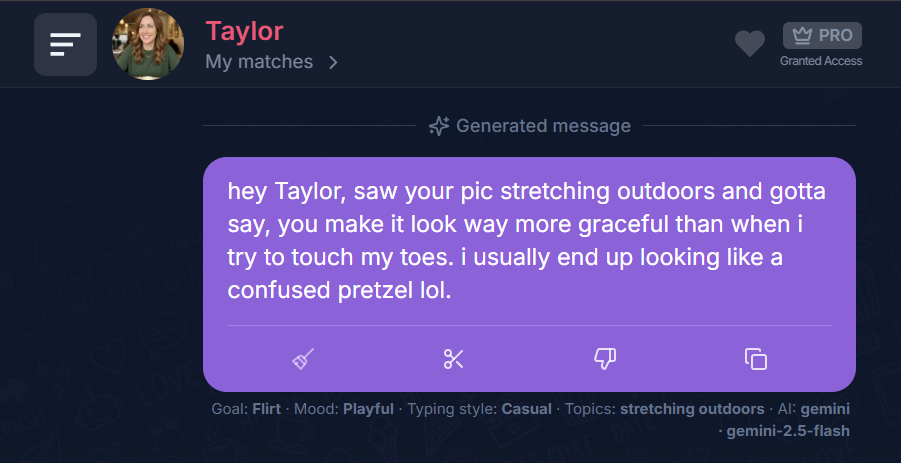
The screenshot below shows a suggestion for Taylor with the Topic stretching outdoors and the settings Flirt · Playful · Casual. Notice how the draft stays with one subject. In your own chat, choose a topic that fits the profile or what you have already discussed.
A worked example: choose the approach that fits
An opening works best when the other person can see why you sent it to them. A single reference to their interests is enough. If they have already asked a question, answer that before adding your own topic; an opening line should not erase the conversation already underway.
The situation
Fictional example for illustration. The messages below are editorial examples, not live AI output or real user conversations.
Their profile mentions weekend cycling and hunting for good pastries. There is no incoming message to answer yet.
Three approaches to consider
Choose the approach that fits your intentions. Replace personal details with your own; these are alternatives, not a sequence to send.
1. Ask for a recommendation
Which bakery has earned a repeat stop on your rides?
A recommendation is specific and allows them to explain their taste.
2. Explore the ritual
Is the ride planned around the pastry stop, or is the pastry a reward?
This gives two playful interpretations of the same detail.
3. Offer your own preference
I am loyal to almond croissants. What is your post-ride order?
You contribute something about yourself rather than only requesting information.
Keep the opening easy to recognize
Use the actual activity in the profile, not a list of traits you assume go with it. Cycling does not tell you whether someone is competitive or outdoorsy in every part of life. Ask and let them describe themselves.
Let the app show you the available next step
Messaging features and permissions can vary. Follow the options shown in your conversation rather than assuming one universal first-message rule. The writing task remains simple: respond to what is there or introduce one relevant subject.
What to avoid
Skip a generic compliment followed by several questions. An opener is an invitation to talk, not a request for a complete personal profile.
Examples by situation: choose your next message
Choose the example that fits your conversation and adapt the details to your own style.
Their opening question asks about your weekend
I tried a new bakery and chose entirely by how good the window looked. What was your weekend discovery?
When this fits: Answer the actual question before asking another. Replace the bakery with something that happened to you.
If they engage: If they mention a place: ask what made it worth visiting and share whether you have been.
If the reply goes another way: If they say they stayed home: “What did you get up to at home?” Avoid making staying home sound disappointing.
The first message is just hey
Hey! Your profile mentions learning guitar. What is the song you keep coming back to?
When this fits: Acknowledge the greeting and introduce one profile detail. You do not need to criticize their opening.
If they engage: If they name a song: discuss the music or what makes it fun to learn.
If the reply goes another way: If they correct you: acknowledge the correction instead of continuing with the wrong assumption.
You are starting from a profile photo
That looks like an excellent bookshop. Were you looking for a particular book or just browsing?
When this fits: Use only if the image clearly shows a bookshop. It invites a small story about the visit.
If they engage: If they mention an unexpected purchase: ask what drew them to it.
If the reply goes another way: If they did not buy anything: talk about browsing rather than forcing a book recommendation.
A playful choice when details are sparse
A free afternoon appears: new food spot or a familiar favorite?
When this fits: Two ordinary choices are easy to answer without demanding a personal confession.
If they engage: If they pick somewhere new: share one kind of food you would like to try.
If the reply goes another way: If they choose a favorite: ask what makes them go back. If the exchange stays one-sided, let it pause.
Reply to the question before starting a new subject
If they open with “What did you do this weekend?”, a profile-based joke alone leaves their question unanswered. Give them something real to react to.
You: “Helped my brother move. I now have strong opinions about fourth-floor apartments. How was yours?”
Them: “Much quieter. I finished a puzzle.”
You: “That sounds more relaxing than my furniture puzzle. What was the picture?”
The second question connects to what they said. If your weekend was uneventful, say so with a small detail: “Mostly laundry and finally finishing my book.” An ordinary answer can still begin a good exchange.
Who can send the first message on Bumble?
Bumble’s current help page says each person can send an opening message, and Opening Moves are no longer part of that experience. Check the chat and its timer before planning your next message.
Related reading
Bumble now lets anyone message first · How to start a conversation on Hinge · Why your matches aren't responding