

A few years ago, I never would have imagined that an AI app would play a role in changing my dating life.
I never would have imagined that I would need an AI app for dating at all.
Sometimes the best products do not start with a business plan. They start with a problem you are personally living. That is exactly how Charmlet began.
Before Charmlet
My friend and I have known each other for a long time. Back in 2016 we were already working together as co-founders of another startup, Amo Vitrine, an app we built in Joinville, Brazil, to bring the experience of browsing store windows to people's phones. The project even caught local media at the time.
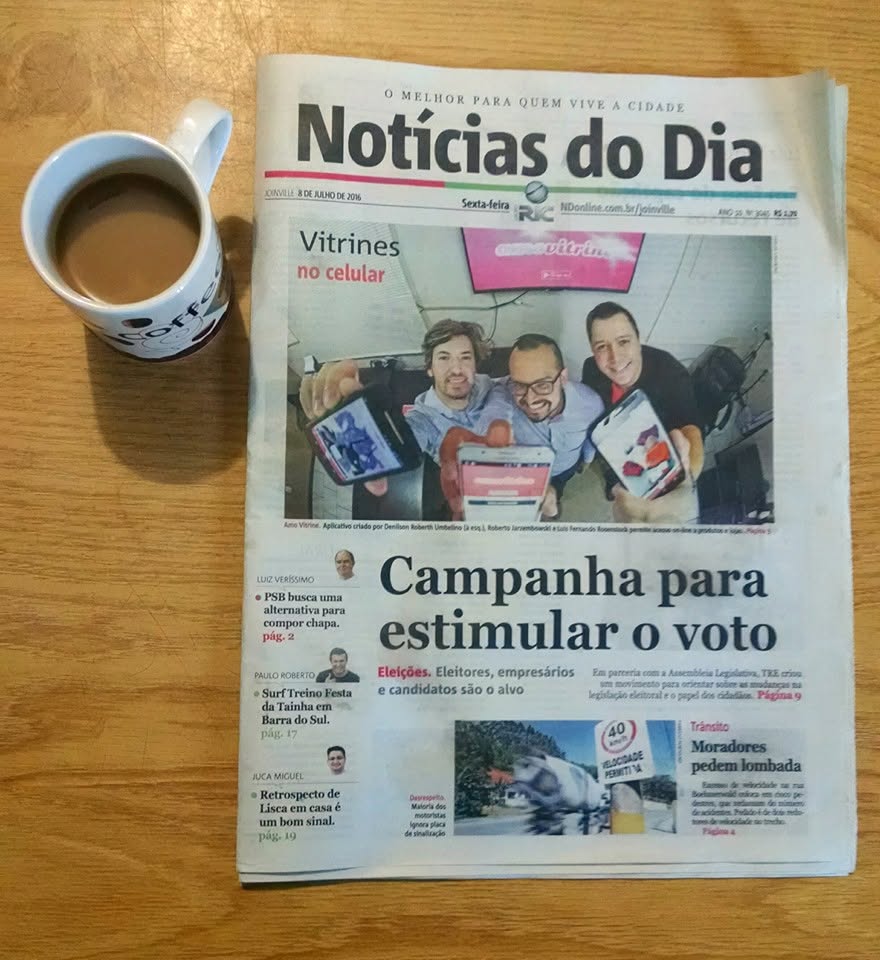
After about a year, we sold the company to a larger SaaS company in our city and went our separate ways professionally. Years later we both ended up living in Canada, and that is when my dating problems started.
After getting out of a long-term relationship, I found myself back in the dating world after years away. I created a Hinge profile and a Bumble profile and, surprisingly, getting matches was not difficult. I got more than 100.

At first I thought that was going to be the hard part. It wasn't.
Getting the match was easy. Talking was not
Dating had changed a lot while I was away. Getting a match was one thing. Knowing what to say after the match was something completely different.
There was another problem: English was not my strongest language at the time. Living in Canada meant that most of the women I was talking to were English speakers. I often found myself staring at a conversation trying to figure out what to say next. Sometimes I knew what I wanted to say, but I was not sure how to say it naturally. Other times I simply had no idea how to keep the conversation going.
I did not want to send generic pickup lines. I did not want to sound like someone I wasn't. And I definitely did not want every conversation to feel like an interview: “Where are you from?” “What do you do?” “How was your weekend?”
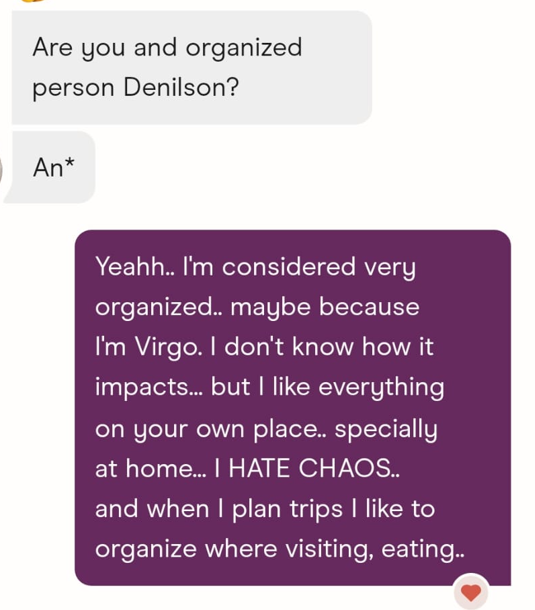
I had matches. What I did not have was confidence in what to do with those matches.
Then my friend had an idea
My friend was already working on an AI-powered message generator. The original idea was not specifically about dating. It was a more general tool that could help people write messages for different situations.
We were talking about my dating life, as long-term friends often do, and I started telling him about the difficulties I was having. That is when he had the realization. The problem I was describing was exactly the kind of problem the technology he was building could potentially solve.
He did not need to build an entirely new product. He just needed to point it in a different direction. Instead of helping people write any kind of message, what if it helped people navigate dating conversations? That was the beginning of Charmlet.
Then we started looking at what was already out there. And there was a lot. We quickly found a crowded store of AI dating and message apps, some with huge download counts. At first that made us think the problem was already solved.
So we did what we thought any founders should do: we tried them. We looked at how they generated messages, how they handled conversations, what information they asked for, and what the actual experience was like. The more we tested, the more we realized something important. There were plenty of apps that could generate a pickup line. That was not the problem I was trying to solve.
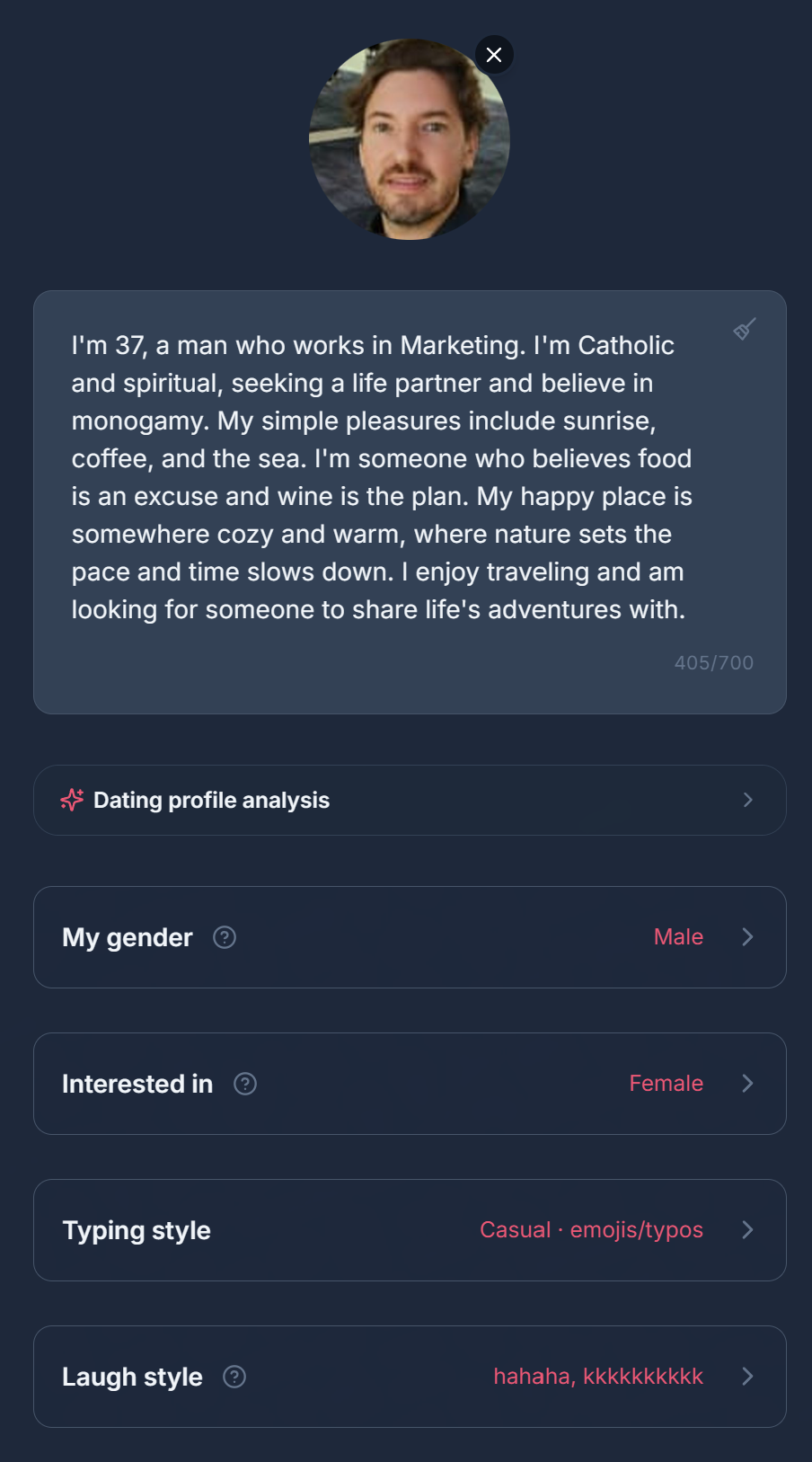
I did not need an app to give me a random clever sentence. I needed something that understood the context of the conversation, the person I was talking to, what had already been said, and what I was actually trying to do. Unlike what the other apps were doing, we wanted Charmlet to be able to read both profiles, mine and hers, so the suggestion would actually fit. I needed help communicating, not just generating text. That distinction became one of the foundations of Charmlet.
It wasn't about having AI talk for me
One of the things that mattered to me from the beginning was that I did not want an app to pretend to be me. I did not want to copy and paste some robotic line and send it to someone.
I wanted help expressing what I was already thinking. Sometimes I knew exactly what I wanted to communicate but did not know how to phrase it naturally in English. Sometimes I had an idea but could not figure out how to turn it into an interesting conversation. And sometimes I simply needed another perspective.
Charmlet became that extra perspective. Little by little I started using it during my conversations, and something changed. The conversations started flowing better. I became more comfortable keeping them going. I stopped overthinking every message. And, most importantly, the conversations started turning into actual dates.
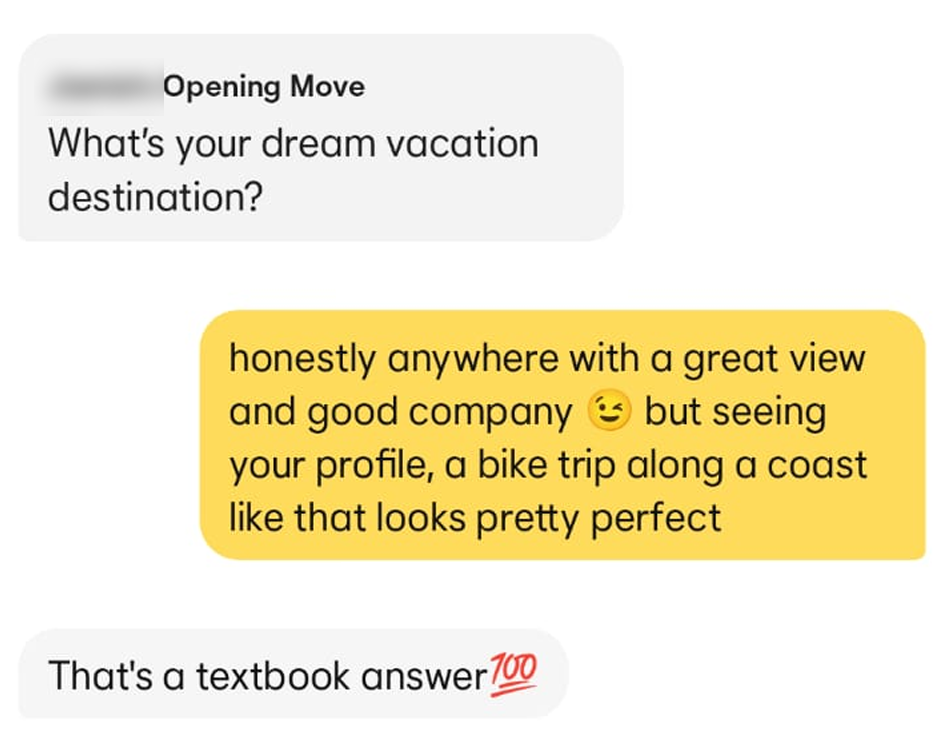
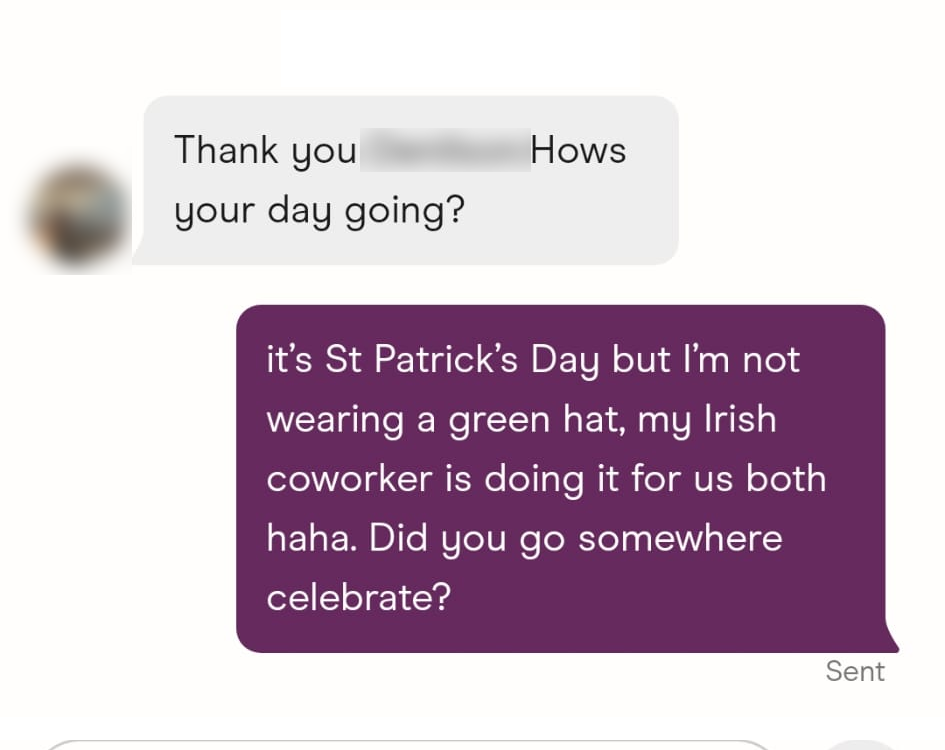
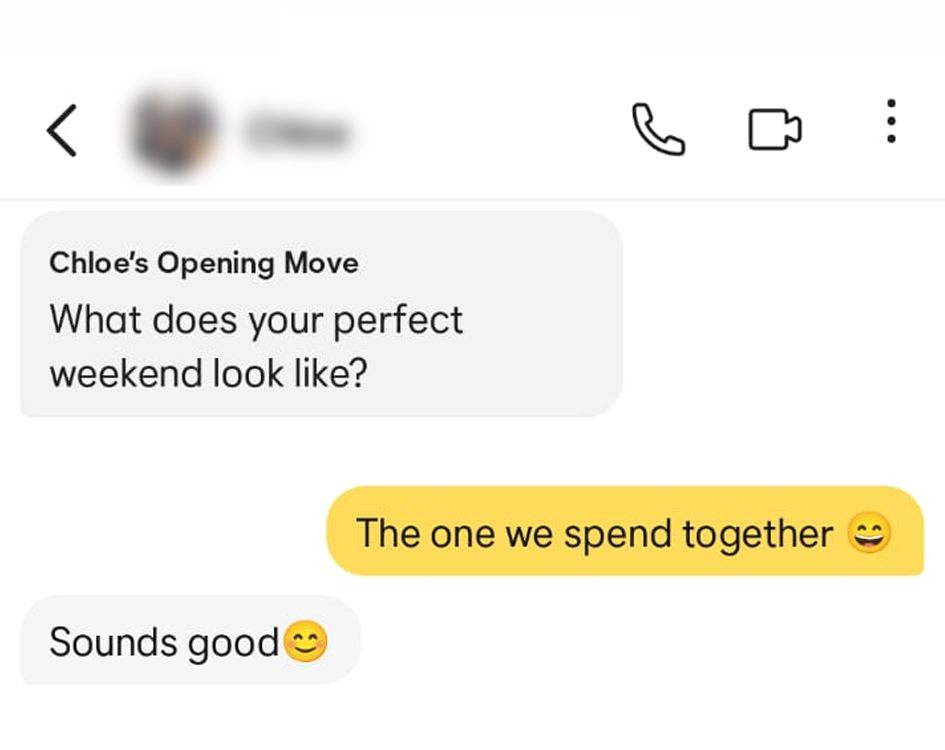
The matches finally became dates
That is when I realized that my original problem had never really been getting matches. I had already gotten more than 100. The problem was converting those matches into real conversations, and those conversations into real connections.
Charmlet helped me bridge that gap. It gave me the confidence and the words I sometimes needed to keep things moving. And eventually, the dates started happening.

One of those matches became much more than a conversation. Today I am in a relationship with someone I met during that period. Which makes the story a little funny. The app that helped me figure out what to say to someone I was trying to date eventually became an app I still use with the person I am actually dating. But now I use it differently.
From dating to a relationship
Charmlet grew with me. What first helped me figure out what to say after matching with someone became something I could also use once I was in a relationship. The questions changed. Instead of “What should I say to this girl I just matched with?”, it became “What could we do together?” “What's something fun I could suggest?” “How can I surprise her?”
I still use the message generator for my girlfriend, whether I already know what I want to say but need help putting it into words, or I simply want some inspiration. It is especially useful for important moments like her birthday, Valentine's Day, an anniversary, or a night when I want to send her something thoughtful. Same rule as before: I read it, I change it if I need to, and I am the one who hits send.
Then there are Date ideas, the part of Charmlet I use now that we are already together. Instead of always wondering what we should do on our next date or falling back on the same old plans, I can get ideas of things we can actually do together, at home or going out. That is a different job from a first message on Tinder.
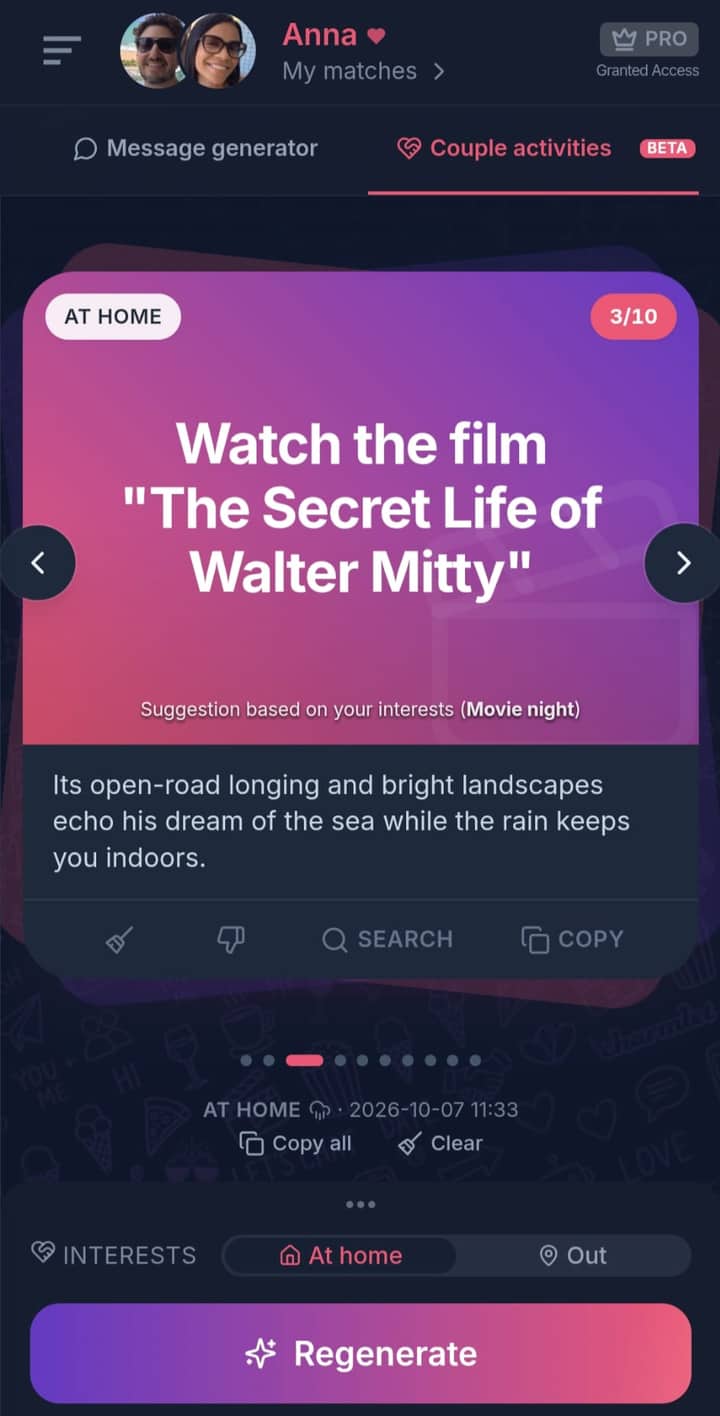
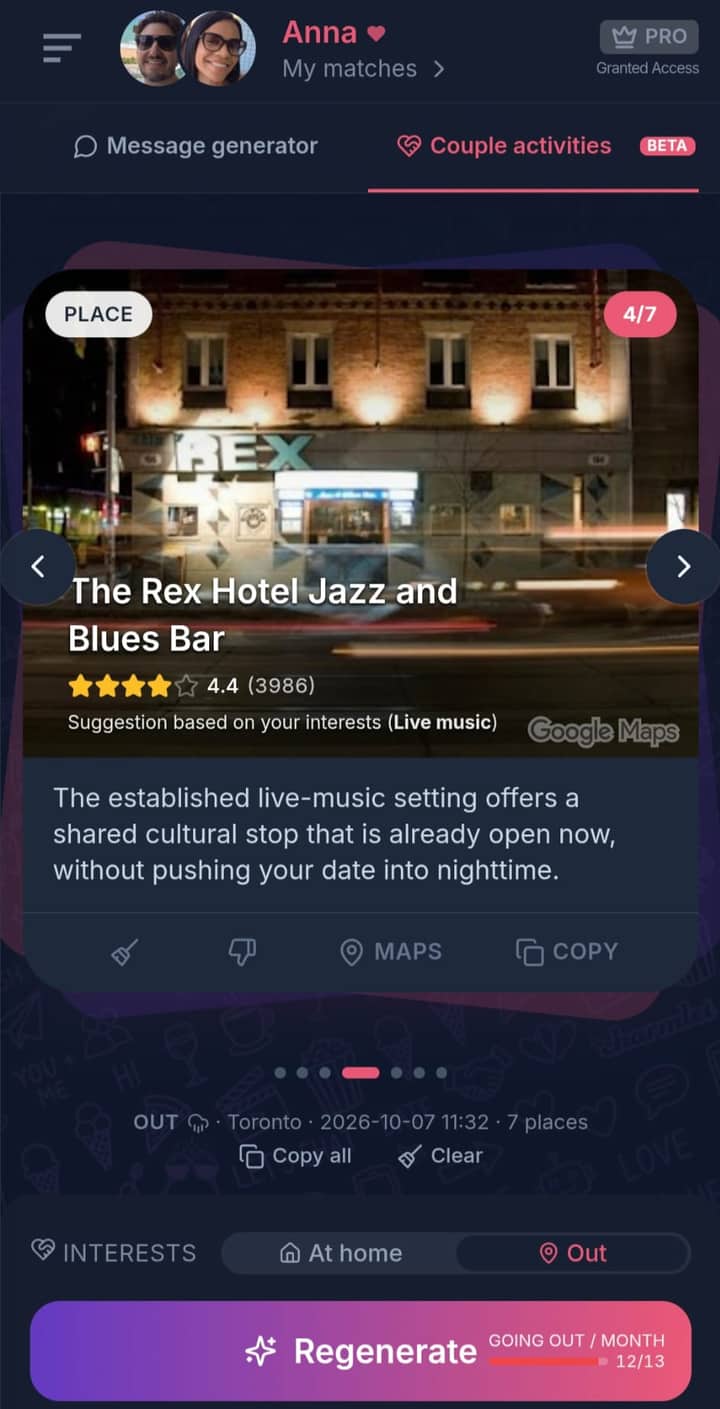
That is what makes the whole idea behind Charmlet interesting to me. It is not really about one moment in dating. There are two very different phases where I needed a little help: getting to know someone, and keeping the relationship going. In the beginning, Charmlet helped me navigate conversations, build attraction, and get from a match to a real date. Now that I am in a relationship, it helps me keep things interesting, find new things to do together, and find the right words for the moments that matter.
The problem changed. So did the way I use Charmlet. But the need for a little inspiration did not disappear. That is probably the biggest difference between Charmlet and the way I originally thought about dating apps. Dating does not end when you get into a relationship. In some ways, that is when a different kind of challenge begins: keeping the connection alive, making time together meaningful, and continuing to show the other person that you care.
Why this feels different to me
I have been part of a startup before. My friend and I built a company together years ago, sold it, and moved on. Charmlet was different. This time I was the user.
I was not a hypothetical customer profile in a presentation. I was the guy staring at a Hinge conversation wondering what to say next. I was the guy trying to communicate naturally in a second language. I was the guy who had plenty of matches but was not confident about turning them into something real. And then I became one of the people building the product that solved that problem.
That is probably why Charmlet feels so personal to me. Because I did not just help build it. I actually needed it. And it changed my life. Not because an AI found me a girlfriend, but because it helped me communicate better, feel more confident, keep conversations alive, and ultimately create opportunities for real connections.
And that is what I think Charmlet is really about. It helped me start something, and it helps me keep it going. The technology started the conversation. I still had to live it. And that is the part that mattered.
Related reading
How to get back into dating after a long relationship · Can routine kill a relationship? · How to keep a conversation going